RiskOS Agents Hero
RiskOS Agents

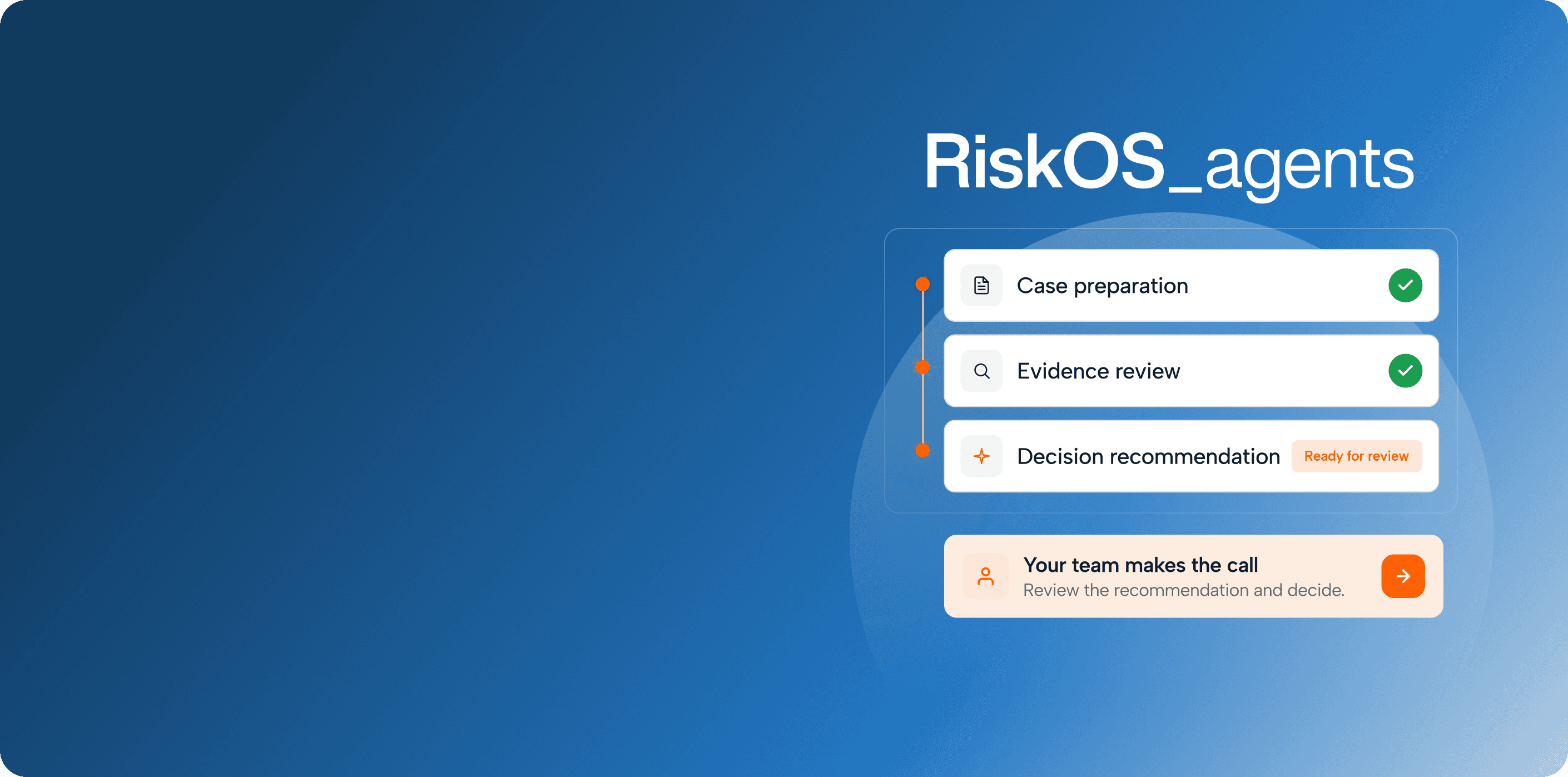
Agents do the casework. Your team makes the calls.

RiskOS_Agents investigate, document, and resolve fraud and compliance cases under your policies, inside the RiskOS workflows you already run. The first agent, Watchlist_Triage, is live today, clearing eligible false positives in under 20 seconds.

Overview

Watchlist_Triage

Watchlist_Triage, the RiskOS_Agent for first-level watchlist alert reviews

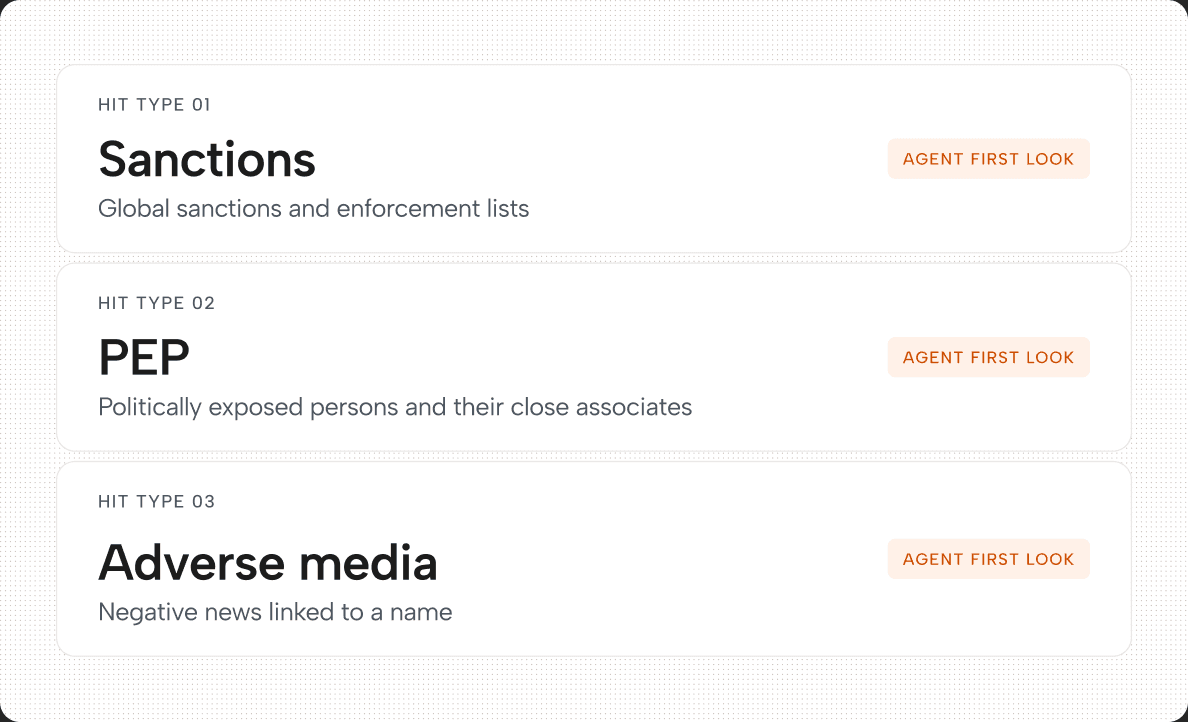
Watchlist_Triage reduces time spent manually reviewing false-positive sanctions, PEP, and adverse media alerts. It evaluates each match, then escalates or closes it according to defined policies.
In customer tests, the agent cleared up to 92% of false positives with zero true matches missed. Every agent-cleared alert was a false positive. Fixed decisioning rules and your own organization’s policy govern clearance. Possible matches, uncertainty, and errors go to a human analyst. The agent’s research and reasoning are fully logged in an audit trail for review and compliance.

Key Benefits
updated icon style

Clear eligible false positives at scale

updated icon style

Keep possible risk in human review

updated icon style

Control what automation can clear

updated icon style

Explain every disposition

Clear eligible false positives at scale

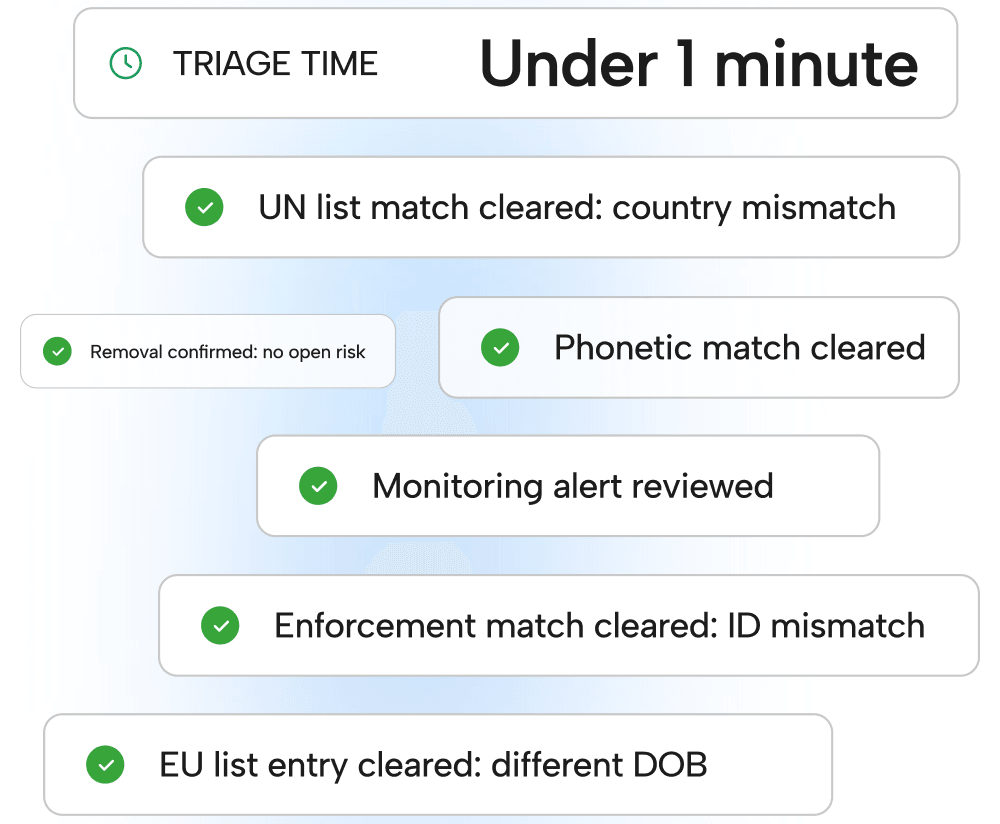
Routine false positives take analysts away from cases that need judgment. Watchlist_Triage automatically clears eligible false positives within approved limits, giving analysts more time to focus on true risks. Up to 92% of false positives cleared, with watchlist hits triaged in under one minute.
G02_Clear-eligible-false-positives@2x

Keep possible risk in human review

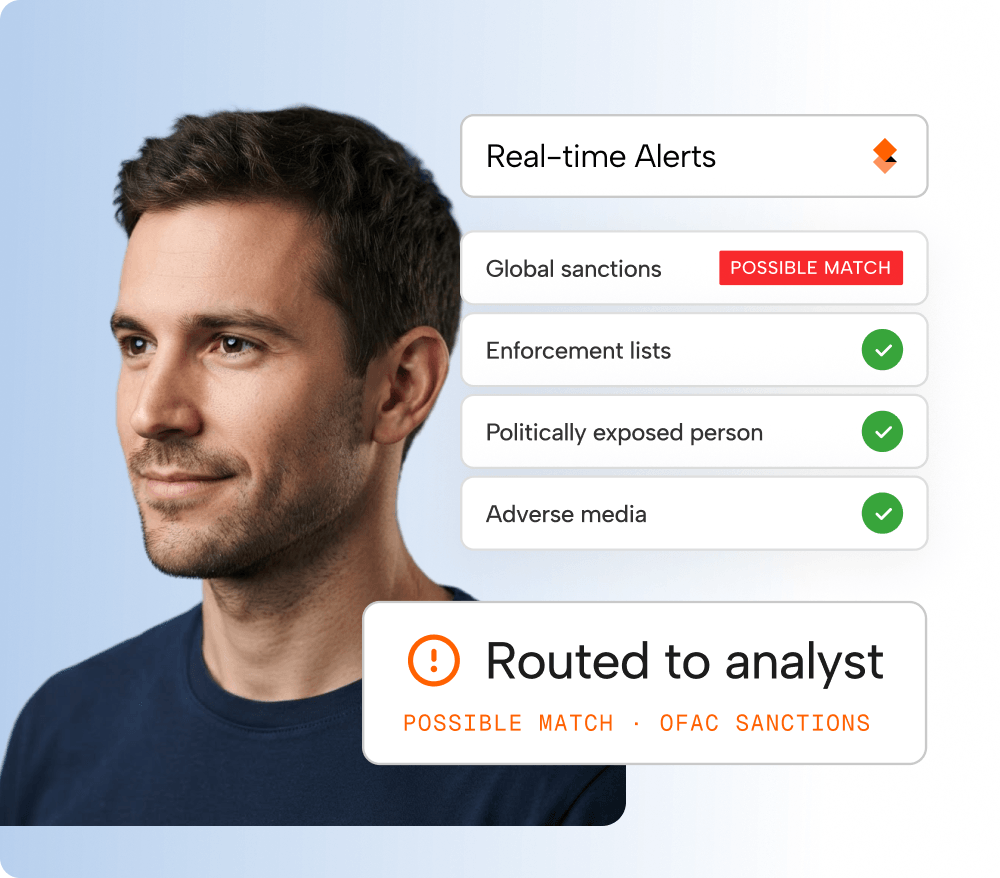
Fixed identity rules and approved policy limit clearance. Possible matches, uncertainty, , and confirmed or unresolved sanctions identities go to analysts. Testing recorded zero true-match misses, and every agent-cleared alert was a false positive.
G03_Keep-possible-risk-in-human-review@2x

Control what automation can clear

Choose the clearance mode by case severity, set approved limits, and back-test policy changes against your own alerts before go-live.
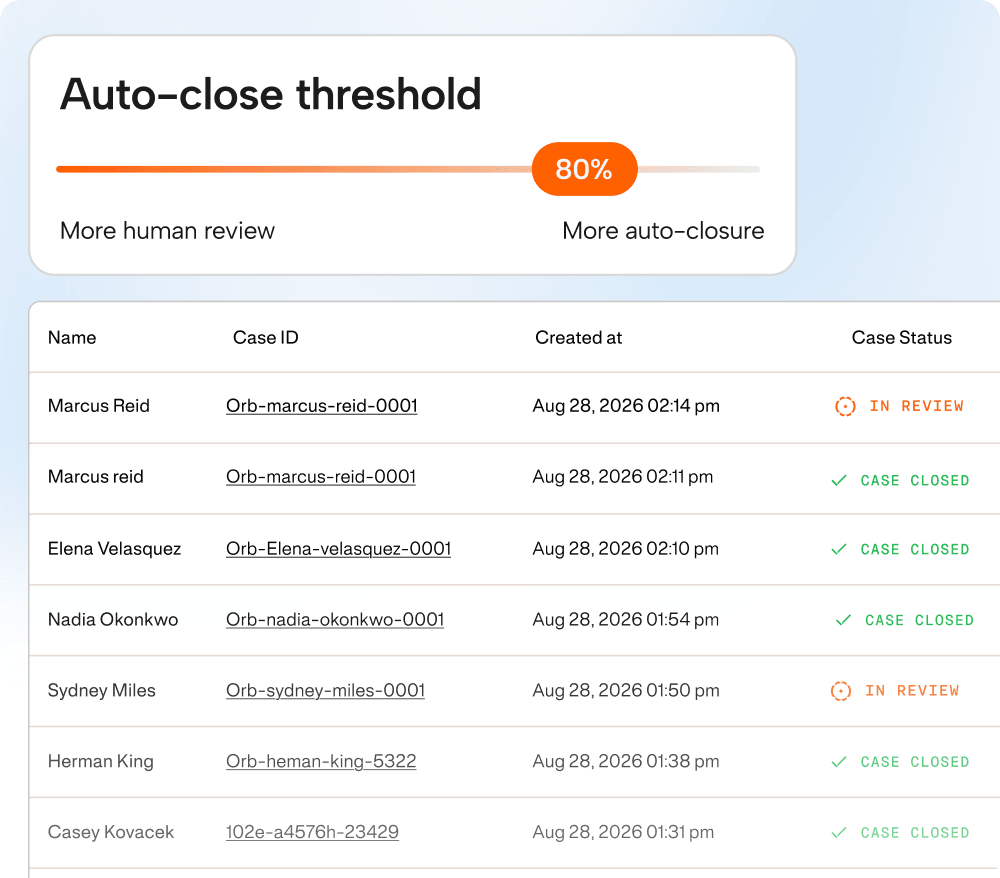
G04_Control-what-automation-can-clear@2x

Explain every disposition

Each disposition records a verdict, confidence, reason, and deciding rule, with evidence and reasoning logs. Version histories are available for review, developed to ensure compliance and accountability. In testing, the agent showed 98.8% agreement with expert reviewers on review vs. no-match classification.
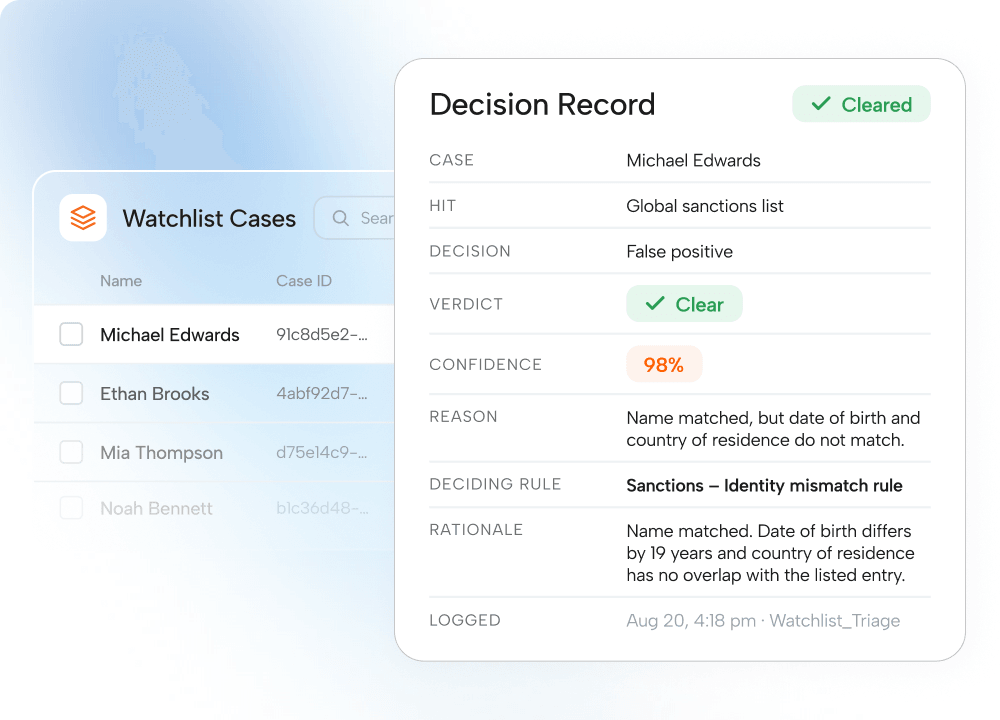
G05_Explain-every-disposition@2x
Why Socure

Socure connects detection, decisioning, and investigation.

Socure’s Watchlist product uses enriched input identities from the identity graph and resolved match identities to run sanctions, PEP, and adverse media checks. Deeper profiles for matching, industry-leading matching models, and the Watchlist_Triage agent outperform standalone agentic players layered on top of third-party data. Clear false positives. Preserve true-match detection. Increase efficiency without increasing exposure.

Detection
G06a_Why-Socure_READY-FOR-DEV@2x

Watchlist screening generates sanctions, PEP, and adverse media hits for investigation.

  • RiskOS for lifecycle-wide decisioning and orchestration.
  • Watchlist for sanctions, PEP, and adverse media screening and monitoring.

Frequently asked questions

What are RiskOS_Agents?

RiskOS_Agents are Socure’s first-party AI agents for fraud and compliance operations. They investigate cases against your policies, document every finding, and close eligible cases inside guardrails your team defines, escalating anything outside them to a human.

How do RiskOS_Agents decide which cases to close automatically?

RiskOS_Agents apply the policies, thresholds, and risk tolerances your team has already approved. Cases that fall inside those guardrails, with supporting evidence, are documented and closed. Anything outside them, or inconclusive, is escalated to an investigator.

Do RiskOS_Agents replace human investigators?

No. RiskOS_Agents handle the routine, repeatable parts of an investigation so investigators can focus on the exceptions that need judgment. Your team still approves every change to policy or strategy the agents recommend.

How does Socure prove that a RiskOS_Agent applied a policy correctly?

Every RiskOS_Agent records the evidence reviewed, the policy applied, its reasoning, and any human approvals for that case, so compliance leaders can reconstruct any decision and demonstrate consistent policy application.

Why is agentic AI relevant to financial-crime compliance now?

Because the work outgrew the teams. U.S. organizations spend about $100 billion a year on fraud, compliance, and risk operations, much of it manual (Liminal), and AI-driven fraud attacks across Socure’s network rose 8,000% in 2025.

How much does the false-positive burden cost financial institutions?

Most watchlist alerts turn out to be false positives, and each one takes an analyst’s time. Across existing deployments, agents cut false positives by as much as 70% and cost per case by up to 80%.

How long does it take to get RiskOS_Agents live?

RiskOS_Agents run on RiskOS, the same platform behind Socure’s identity, fraud, and compliance decisioning. Agents are configured from your own SOPs and policies, and you can backtest them on your historical cases before go-live. Existing RiskOS customers need no new development work.

Which RiskOS_Agents are available today?

Watchlist_Triage is live. Watchlist_Investigate and the KYB Agent are next, followed by agents for AML, transaction investigations, and disputes.

How are RiskOS_Agents different from other AI agents for compliance?

They’re first-party: built by Socure, tuned on Socure’s data, and running inside RiskOS, where the decision is made. They start with the same identity-resolved watchlist data, identity graph, and policies your workflows already use, instead of bolting onto someone else’s system and re-gathering the evidence.

How are RiskOS_Agents different from the RiskOS AI Suite?

RiskOS_Agents and the RiskOS AI Suite serve different purposes. RiskOS_Agents take on case-level investigation workloads. The RiskOS AI Suite helps automate and explain your risk strategy.

Clear false positives. Preserve true-match detection.

Increase efficiency without increasing exposure. See what Watchlist_Triage looks like on your own alerts.